











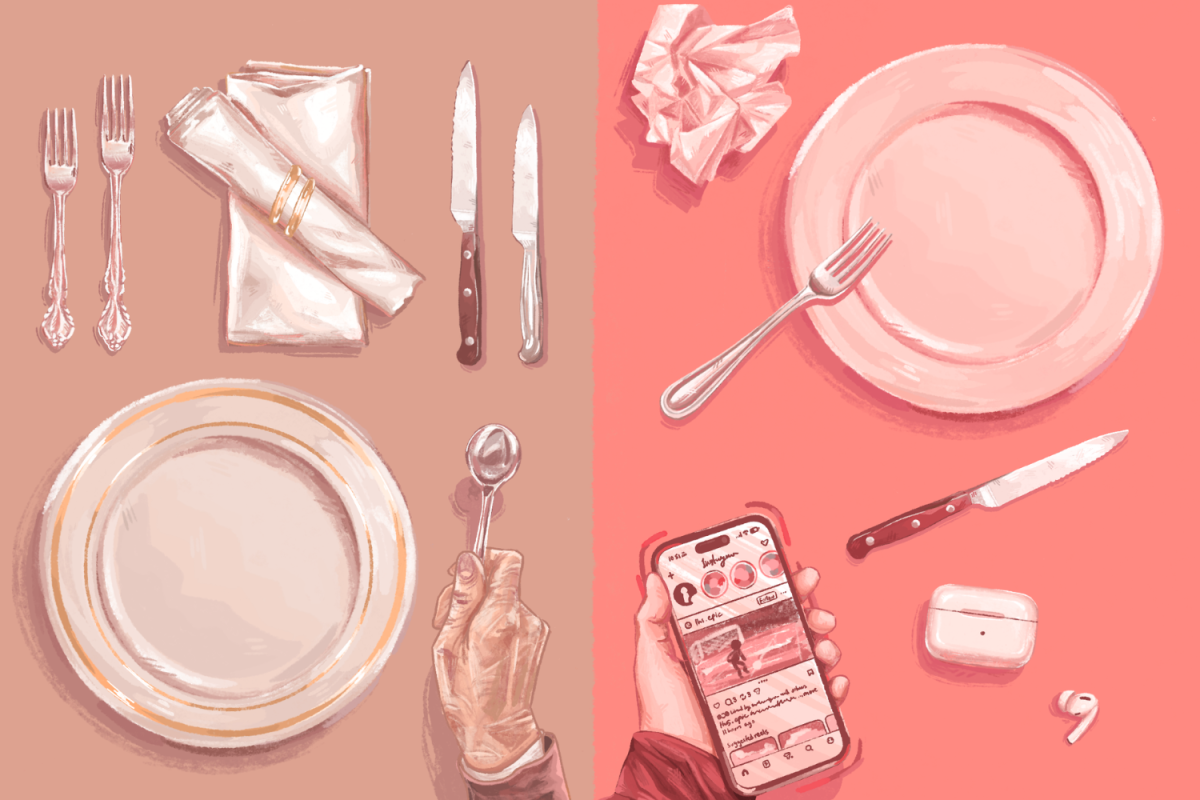
New manners reflect social change
The Generation Z barista doesn’t make small talk. She doesn’t smile at the kid playing by the window, nor laugh with the old man over a misspelled name. The discomfort many feel around a “no manners” attitude isn’t really about politeness at all, but rather the loss of familiar social routines.
As social norms evolve, younger generations trade performative courtesy for boundaries and authenticity.
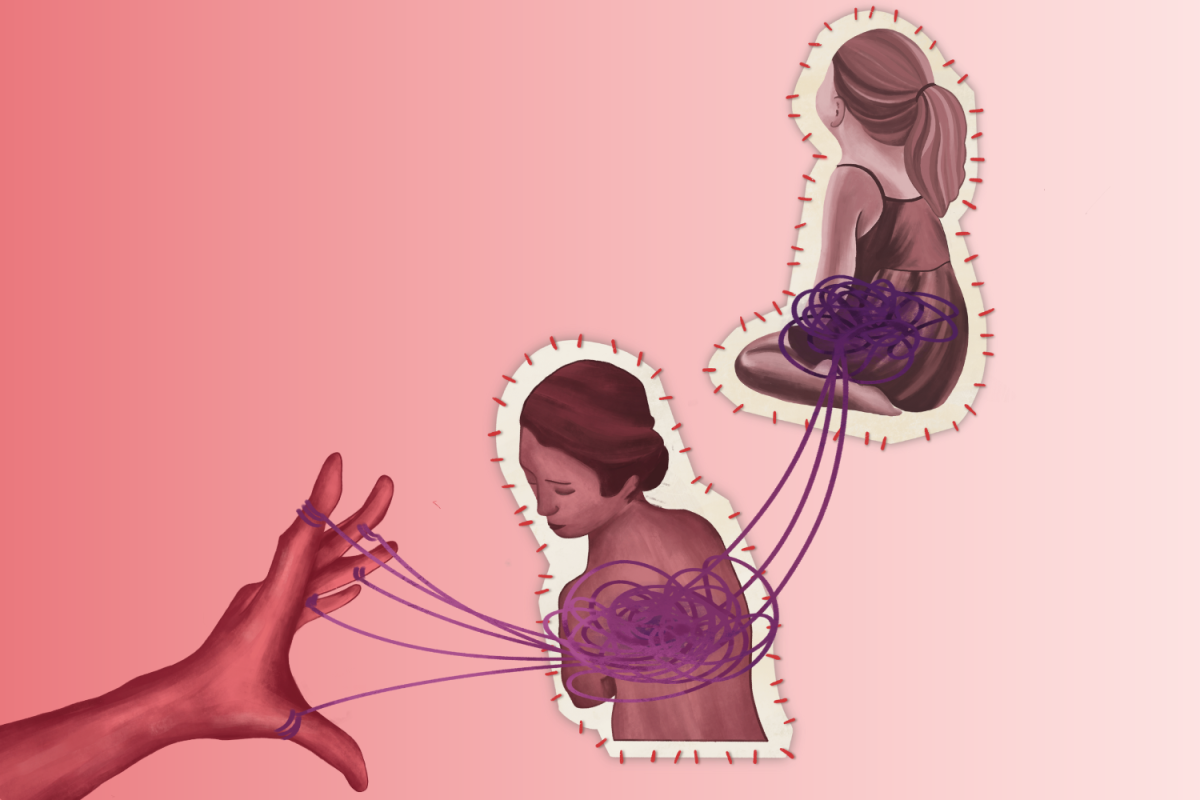
“As a child, I was taught that etiquette is the unbending law in the social world,” human resources vice president Nadezhda Montclair said. “I recall it feeling like control, and for the longest time, I associated manners with suppression and social performance.”
The pressure to suppress personal expression often leads to a quiet buildup of bitterness dressed in obedience.
Instead, communicating boundaries clarifies expectations of what a person can
take on. Gen Z sends the message that it’s okay to not be overly polished, but rather have the courage to be authentic.
Modern language illustrates a shift in intergenerational mindsets. Older generations
often revere titles of seniority such as “sir” or “madam,” which reinforces strict social hierarchy. Conversely, being on a first-name basis with authority figures has become increasingly common among younger generations, creating familiarity in previously rigid spaces. With formal titles on the decline, increased awareness of identity has changed etiquette today for the better. For instance, the small act of respecting a person’s preference conveys consideration through inclusion.
“Using someone’s correct pronouns is similar to pronouncing someone’s name correctly,” senior and Society of Psychology and Sociology president Tanishi Bhushan said. “Both exhibit general respect towards a person.”
Growing up in a world of rising poverty, violence and climate degradation, nearly 32% of Gen Z regularly participates in social work and advocacy, compared to 24% of older generations. Advocacy may prompt discomfort, but it shows the impact of speaking one’s mind, even against traditional norms.
“I don’t think standing up for yourself is rude,” Bhushan said. “I can see how it may be perceived as rude. But the goal with having that conflicting view isn’t to show disrespect or to question authority. It’s just advocating for yourself in a polite manner.”
The lack of traditional etiquette does not leave behind a lawless society. Consideration and thoughtfulness still retain their importance in younger generations. The Gen Z barista may not laugh at a joke that she doesn’t find funny, but she will remake your drink when you spill it and write a note on your coffee cup when you appear down. Beyond her seeming callousness is a heart forged by honesty, self awareness and respect rooted in tangible action rather than performance.
Etiquette is the baseline of connection
You instinctively ask a question that seems harmless — “How’s your day going?” — and are met with the infamous Gen Z stare, that blank and unreadable expression. While younger generations often frame this behavior as “protecting one’s peace,” this erosion of shared etiquette feels more like emotional negligence. When respect for others crumbles, social connections deteriorate.
Etiquette functions as a shared social language that encompasses everyday interactions. It doesn’t require much emotional investment, yet serves as a sign of consideration for others. When those signals disappear, interactions become harder to interpret. For example, ignoring a peer’s greeting in the hallway can feel like a cold shoulder to the person on the receiving end. While no one is obligated to respond, acknowledgment often prevents unnecessary social tension.
“Everyone has their own moral compass, which plays into how they act,” Bhushan said. “You could think that you’re being direct, but others can perceive it as rude, and vice versa.”
The rise of individuality does not signal the erosion of etiquette, but it
challenges traditional expectations. Social media has propagated a hyper-individualistic mindset, which often prioritizes self-protection over social connection. While setting boundaries is necessary and healthy, it cannot justify social disengagement.
“We need a common baseline, where we can all meet in the middle,” Montclair said. “When there is no baseline at all, people will be left constantly trying to interpret each other. Etiquette is about keeping connections possible, even when we don’t know one another well.”
This shift is becoming more apparent in educational spaces. Some teachers note that students raised during the COVID-19 era of remote learning struggle with face-to-face social cues. This is not a generational flaw, but a reflection of how rapidly social norms are changing without clear replacements.
At the same time, it is important to avoid broad generalizations. This criticism is not directed at an entire generation, as many still practice courtesy with others.
“Thank-yous” and acknowledgements signal effort and care. The challenge is to find the balance between adapting to modern values and maintaining consideration for those around us. Without a common language of courtesy, interactions risk being reduced to indifference, which erodes the social fabric that allows our communities to function.