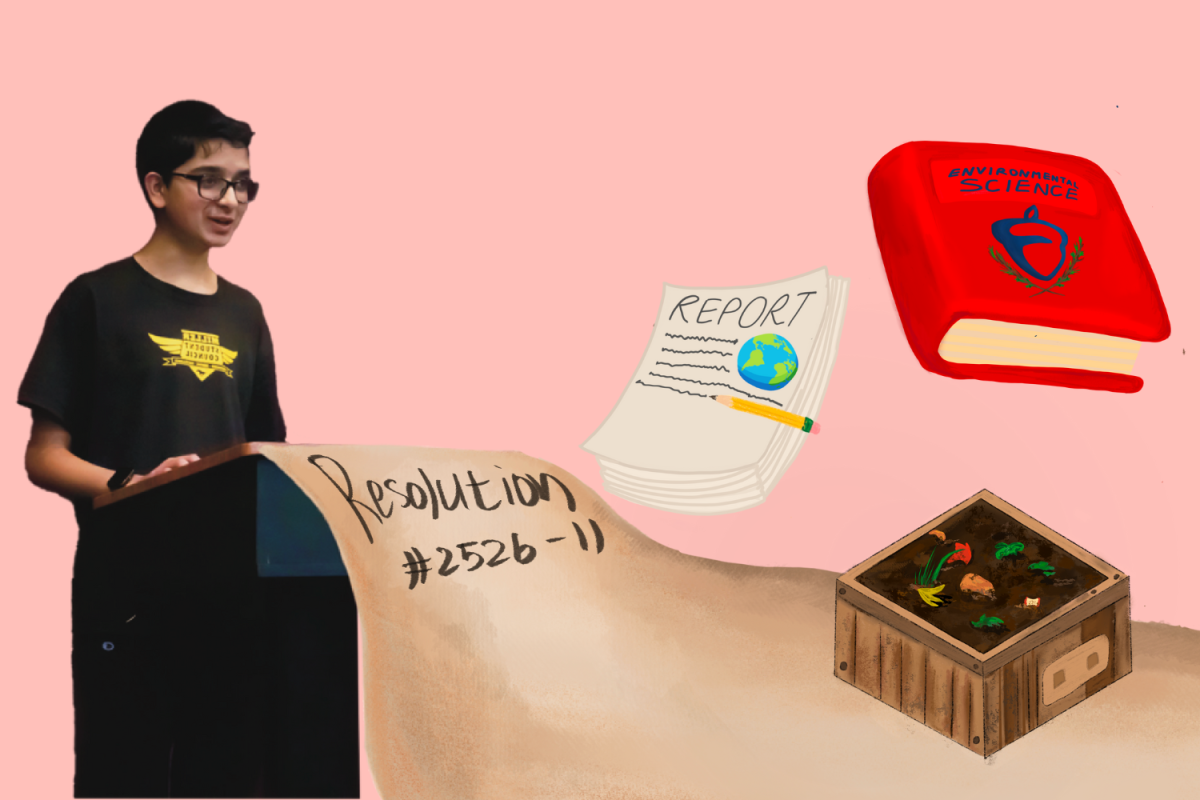


















In the FUHSD boardroom, trustees deliberate over policies that shape the daily lives of more than 9,000 students. One student sits among them, tasked with informing the board of the perspectives of all five high schools. The student board representative is a role many students are unfamiliar with: the path runs almost exclusively through ASB, making it hard for thousands of student voices to reach the board. To bring more views to this platform, the district should add additional student board representative seats, and make the current selection process more inclusive.
For three years, the district has debated adding another student board representative, an FUHSD student appointed to attend district board meetings and present student viewpoints. While they present biweekly reports on student activities and participate in meetings, they have no voting power. The position is a bridge between the board and students.
“At the end of the day, we all want to do what’s best for students,” Assistant Superintendent Paula Robinson said. “The more we hear from students and their various perspectives the more that is going to help guide decisions.”
With two or more student board representatives, the district would benefit from more nuanced opinions. Each school has unique needs and challenges. No matter how diligent they are, one student cannot adequately represent all of them. A Lynbrook student, for instance, may lack firsthand knowledge of student demonstrations against Immigration and Customs Enforcement at Fremont High School or controversies surrounding antisemitism elsewhere.
“The reason we are talking about having more than one student board rep is because we want to better understand students’ perspectives,” board vice president Rosa Kim said. “I believe the students know their own school sites better. It’s all about hearing from our students and better implementing their ideas. As we look at this option, I hope to continue exploring the most effective ways to make it work logistically and realistically for everyone involved.”
Beyond individual school concerns, the board needs to hear from a variety of student groups. A student athlete could offer a valuable perspective on sports equity policies that an arts-focused student might miss, just as a student with disabilities could point out accessibility issues that their able-bodied peers might overlook. With multiple student representatives to fill in knowledge gaps, the board is more likely to hear diverse experiences when discussing policy changes.
Having two representatives also makes the job easier, allowing them to cover each other’s absences and share the workload of gathering feedback from hundreds of groups across the five campuses.
“There’s a lot of groups that as a student board rep, I try to connect with but just don’t have the time for,” senior and student board representative Amy Tang said. “Having two student board reps could help with reaching out to different groups.”
The lack of student representation highlights another core issue: currently, the student board representative role is only formally introduced during the ASB informational meeting, potentially discouraging students outside those circles from applying. Tang is exploring changes, such as involving administrators unaffiliated with ASB in the selection committee and holding open information sessions for the role.
“I think the problem with kids who aren’t in leadership is they don’t see the options that are available for them,” senior and Monta Vista ASB president Elaine Chen said. “They don’t understand that we can actually bring up issues to the board, because it’s not really advertised.”
District administrators echoed these concerns, emphasizing the need for broader exposure to the role.
The district’s concerns about another student representative are largely logistical: the boardroom dais has limited space with strict seating arrangements mandated by board policy, meaning that adding a second student would likely mean rotating who sits on the dais each meeting. This could make it challenging for representatives to maintain synergy.
“If a topic gets brought up in one meeting, I try to address it in the next one,” Tang said. “If it were a handoff between representatives, there could be an issue where one of them isn’t up to date with information.”
However, logistical challenges will not outweigh the benefits. Other districts have navigated similar constraints, offering potential models for how FUHSD could approach this new system. In San José’s East Side Union High School District, student representatives from each school make up a Student Governing Board that meets before school board meetings and holds a singular voting position within the school board.
As the debate moves forward, it should also re-examine how the role itself is introduced. A selection process that reaches students across all five campuses would reflect more accurate demographics. Paired with more consistent outreach, student voices would be amplified, reflecting a wider range of perspectives in district decision-making.