










Younger generations are perceived to be beaming with ideas, loudly progressive and wildly liberal. Older generations are thought to be the opposite: risk-averse and conservative. While statistics show that this is generally the case — younger generations lean more liberal, while older generations lean more conservative — these generational differences don’t necessarily capture the full picture of modern American politics. Instead, they squash out the nuances.
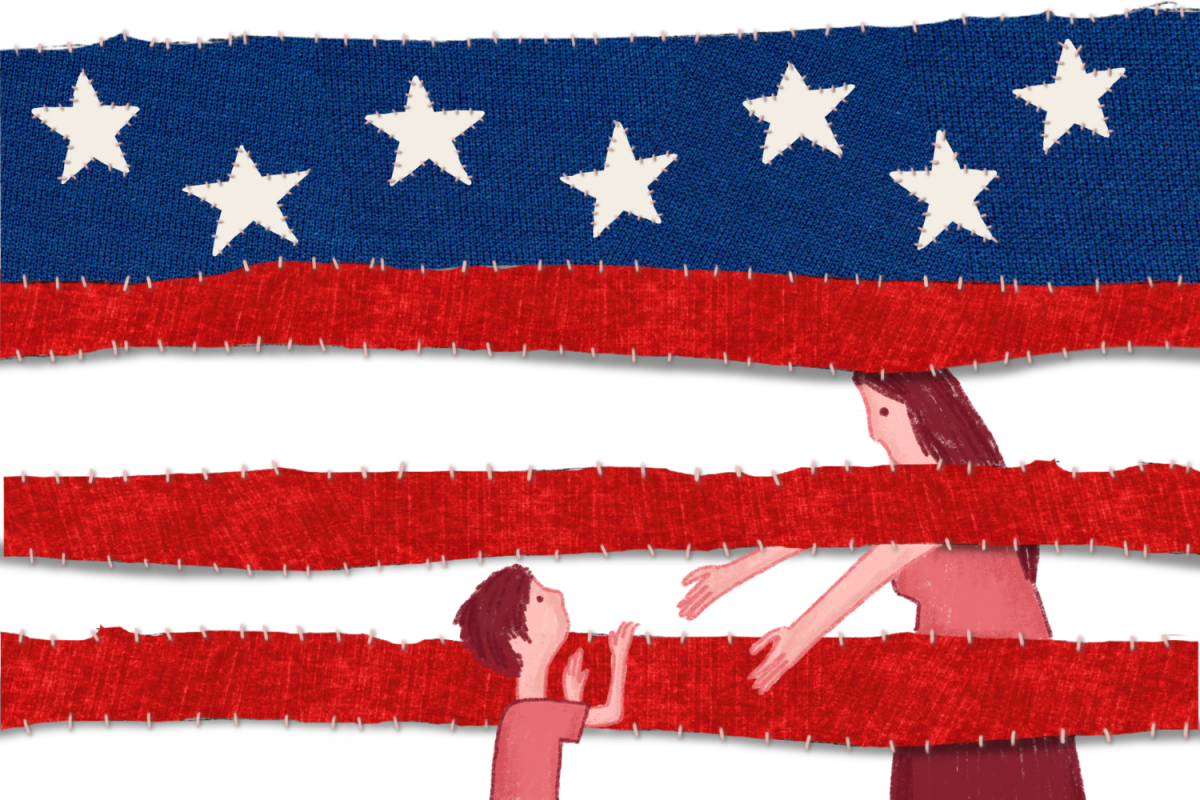
America is the most partisan it has ever been, and rising polarization among youth means increasing investment in the change they want to see. The political activism of young people today is not just an extension of their ideological views, but an attempt to reclaim their share of the American Dream. Yet this backfires. While unrelenting, the youth’s grip on American politics can hinder progress more than foster it.
Within Generation Z, the percentage of individuals who feel anxious all the time is 38% — more than twice as many as the 17% of baby boomers. This statistical difference likely relates, at least in part, to young people’s increasing apprehension toward their future in America. Housing prices continue to climb faster than the median household income, unemployment rates are beginning to rise again, artificial intelligence doomers warn of imminent catastrophe — and lo and behold, younger generations are beginning to distrust the political system and becoming desperate for change.
“The system itself doesn’t seem to be working the way it did for our grandparents or our parents, who either came to America as immigrants or were born in America,” Signore said. “If they worked hard and got a good job, they could own a house and send their kids to college. Whereas nowadays, going to college not only doesn’t guarantee you a house, but also not even a job.”
This disillusionment becomes clear when looking at the distribution of political views within generations. Historically, people within one generation have distinct leanings toward a certain political ideology. But in younger generations, this trend has begun to slip toward polarization and uncertainty instead. In a 2025 Yale University poll of 4,100 respondents, voters aged 18 to 21 preferred Republican candidates, while voters aged 22 to 29 preferred Democratic candidates in the 2026 congressional elections. A comparison between polls conducted by the New York Times and Siena in 2025 and 2026 show a 10% rise in youth who responded “don’t know/refused” to their party affiliation.
But how does this mindset manifest? There has been a recent surge in political advocacy among this generation. In pursuit of their ideal world, Gen Z is pushing toward radical change, often through social media and other digital forms of activism. Social media acts as the primary medium for communication among this generation, and studies show that 75% of Gen Z receive news daily from social media. Additionally, in a schoolwide survey sent out to students and staff, 85.3% of 116 respondents reported receiving news from social media, among other sources. With the ease of distribution provided by social media, information spreads quickly and efficiently.
“As younger people, we tend to get information from short-form content with Shorts or Reels,” senior and Students for Literacy officer Ankita Ramabadran said. “That’s a place where ideas spread quickly and personal stories are emphasized, which could make the issue feel more immediate and emotionally engaging.”
This makes social media ideal for political activism. In recent years, activists have taken to platforms like Instagram and X in order to mobilize followers and raise awareness. The “Red Pill” community, spearheaded by social media influencers like Andrew Tate, is an example of a far-right youth movement. On the other end of the political spectrum, the No Kings protests that took place in fall 2025 and mobilized millions of protestors across the country were primarily promoted through social media.
“The No Kings protest definitely would not have gotten the traction that it got if it wasn’t for social media being able to mobilize people,” senior and Politics Club co-president Chelsea Guo said. “It doesn’t matter whether you disagree or agree with the point of the protests, but it’s really important to be able to reach people, and for people to be able to go out knowing where you’re meeting and take a stance for these causes.”
However, the advantages of social media don’t come without its costs. Programmed to optimize user engagement, its algorithms quickly become a polarizing machine. For example, the “manosphere,” which encompasses ideologies focused on hypermasculinity and conservative values, has spread on social media and pushed Gen Z men toward the far right. When your understanding of the political landscape comes from your feed, the content you consume becomes a reflection of your own opinions.
“On social media, the way that algorithms work, it feeds you what you’d like,” Signore said. “So if you start liking conservative things, it will keep sending you more and more conservative things. It finds your limit, and then it keeps you there.”
With partisanship dominating Gen Z’s politics, younger generations face the risk of a gridlock, in which irreconcilable divisions halt progress in a stalemate. Gen Z is uniquely vocal about their political beliefs. While vocal activism is important, Americans must also reconcile ideological differences, both within their generation and with older generations. Amid the breakdown of a promised American Dream, young people must not be blinded by their opinions in their search for the ideal future.
“It’s not hopeless,” sophomore Wendi Sun said. “I feel like people can understand each other in one way or another, because we’re all working toward the same goal of having good living conditions.”