


















- Donating and thrifting secondhand clothing has become increasingly popular due to its affordability, efficiency and resurfacing fashion trends.
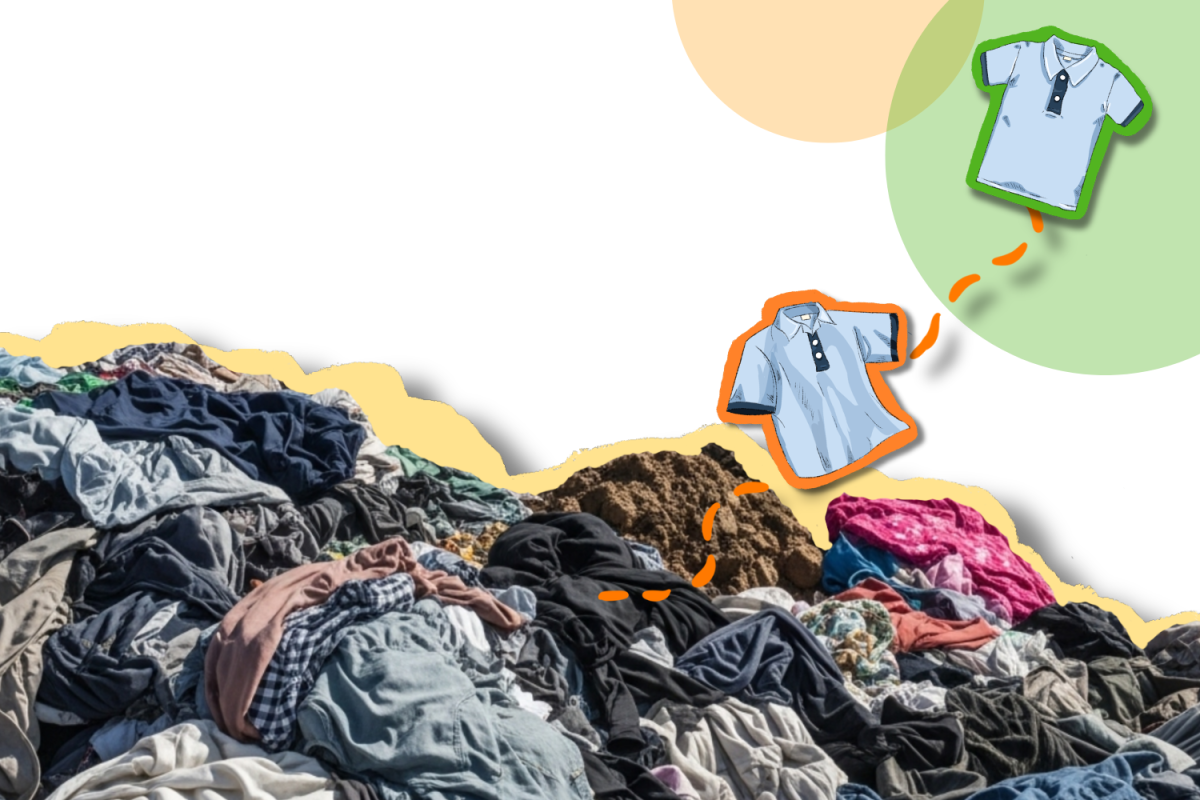
- A large percentage of donated clothing is sent to recycling and landfill facilities as the large amount of donations eclipses the number of secondhand buyers.
- The majority of donated clothing is exported overseas to the Global South, where it can influence local markets.
Donating clothes is often seen as an easy, environmentally-friendly way to declutter one’s closet. However, only around 25% of donated clothes end up in thrift stores: the large amount of clothing donated, which often includes damaged and unsellable pieces, outweighs the number of secondhand buyers. The rest are exported to countries in the Global South, where they influence local markets and environments. As secondhand fashion continues to grow in popularity, the journey of donated clothing extends far beyond local thrift store shelves.
Thrifting emerged in the late 19th century during the Industrial Revolution, when people gained access to machines to mass-produce clothing. At first, reselling clothes was seen as disgraceful because it was associated with financial hardship. But when Christian missionaries were searching for ways to support the poor and unemployed, they resorted to collecting unwanted clothing and selling it to those in need. Two of the earliest charity organizations include the Salvation Army and Goodwill, which were both established by Methodist ministers shortly after the Industrial Revolution.
Over the years, thrifting has become increasingly popular among consumers. Secondhand clothing can be more affordable than buying new clothing, especially during times of rising prices and economic uncertainty. It can also be efficient to buy clothes through online secondhand retail platforms such as Depop and Poshmark, and reemerging vintage fashion trends, such as 2000s-inspired babydoll tops and 90s-inspired jeans, are gaining influence in younger generations.
“Fast fashion has enabled people to purchase more, bringing down the pricing of clothing and making it accessible for more people at a quicker rate and a cheaper price,”said Amy Williams, adjunct professor of sustainability management at the University of Southern California. “This has driven more people into purchasing secondhand clothing, because they’re looking for better value at a lower price than what could be found at the retail market for a first price.”
Some thrifters also search for well-known brands and high-quality garments, as well as unique pieces that are no longer sold firsthand. This allows many consumers to save money and build a personalized wardrobe and style.
“I thrift because it’s more sustainable, prices are way better and I usually find a lot of cool pieces that I can’t find anywhere else,” sophomore Ingrid Mehus said.
Every year, billions of secondhand clothes are donated globally. In 2021, Goodwill received 5.7 billion pounds of donations. However, 50% of clothes that donation centers receive are of poor quality or somewhat damaged, according to the Washington Post. After the pieces are collected, they are sorted, with only those in the best condition sold in thrift stores. These clothes make up about a quarter of the total donations. The rest is sent off to recycling and landfill facilities, which can be located overseas.
“People are actually donating substandard products, such as things that are dirty, have been torn or are unwearable,” said Williams. “The idea of donating makes people feel good, but often they’re not donating clothing of wearable quality.”
Though often considered the most sustainable option, around 12% of secondhand clothing not sold in thrift stores is actually recycled. The process can be difficult because many garments are made from non-recyclable blended fabrics, such as cotton-polyester and spandex, while most recycling systems work best with single-fabric materials like cotton or wool. Clothing that is made from recyclable, pure-fiber textiles is often shredded and respun into thread for new pieces. Additionally, two-thirds of unsold donated clothing worldwide is sent to landfills. In the United States alone, 85% of textiles end up in landfills annually, releasing greenhouse gas emissions.
The most common destinations of unsold donations are Ghana, Kenya and Nigeria, where they are resold in local markets. Pieces that can’t be resold are discarded in the landfill, often clogging drainage systems and eventually breaking down into microplastics. Exporting excess inventory overseas allows many secondhand organizations to manage large volumes of donations while continuing to encourage new contributions, often by promoting their programs as environmentally responsible alternatives to disposal.
“Secondhand departments have to clear clothing out of the stores to make room for the next load of clothes coming in,” said Lynda Grose, professor of fashion design and critical studies at the California College of the Arts. “There’s so much stuff coming in through the doors, and it’s an indication of how much is flowing through the fashion system as a whole.”
Large volumes of imported clothing can influence local economies in multiple ways. In Kenya, imported donated clothing can cost as little as 5% the price of a newly-made garment. This can cause local textile manufacturers to lose customers as they compete directly with secondhand clothing vendors. Known as a primary destination for donated clothing from the Global North, Ghana’s Kantamanto Market is the largest secondhand market in the world. While thousands of traders make a living off selling and repairing these clothes in a dependent relationship with the Global North, vendors selling new clothing find sales becoming less frequent.
“The process is that the bales of clothing arrive and locals will buy those bales, blind, because you can’t really see what’s in the middle,” Grose said. “They break them open, and many of the garments aren’t usable, but they generally sell them in the local markets.”
Whether through recycling, landfill or shipment overseas, this lesser-known aspect of thrifting can have consequences for certain environments and lifestyles, especially in the Global South. As secondhand fashion continues to grow in popularity, the impact of thrifting may depend not only on how much people give away, but also how responsibly clothing is produced, reused and ultimately discarded.