
















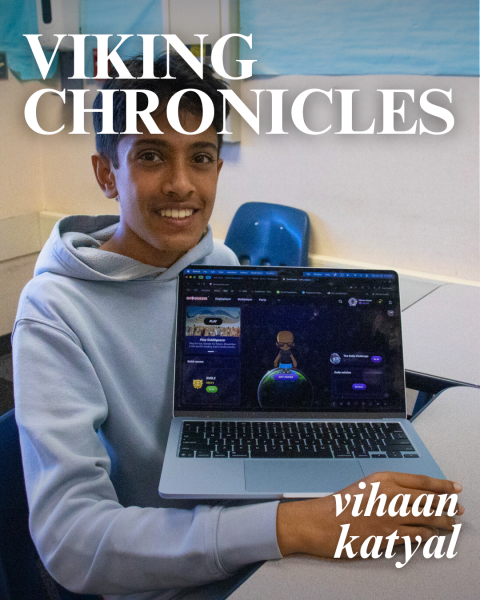
Freshman Vihaan Katyal stares intently at the Google Street View scene on his computer. Once he spots a piece of black duct tape on a car’s crossbar — a giveaway that he’s in Ghana — he clicks on the world map on the bottom of the screen, zooms in to the country and drops a red pin to lock in his guess.
Katyal was playing GeoGuessr, a game that puts players in a random place in the world, challenging them to pinpoint their location on Google Earth using detailed visual cues. A geography enthusiast since fifth grade, when he memorized state capitals for school, Katyal found that geographical relations came very quickly to him. He began looking up maps on his own time, especially those that integrate statistics and political trends.
“Maps are very interesting to me,” Katyal said. “I’ve looked at a lot of them. I like being able to visually view how countries develop over time.”
He was introduced to GeoGuessr through YouTube videos and recommendations from his friends. During a class in eighth grade, his teacher allowed the class to take a five-minute break, during which two of his friends urged him to play GeoGuessr. Since then, playing regularly has helped Katyal develop stronger friendships.
“I’ve been able to form deeper connections with my friends because we have this shared interest,” Katyal said. “Geoguessr is also an easy game to learn, allowing new friends to join games.”
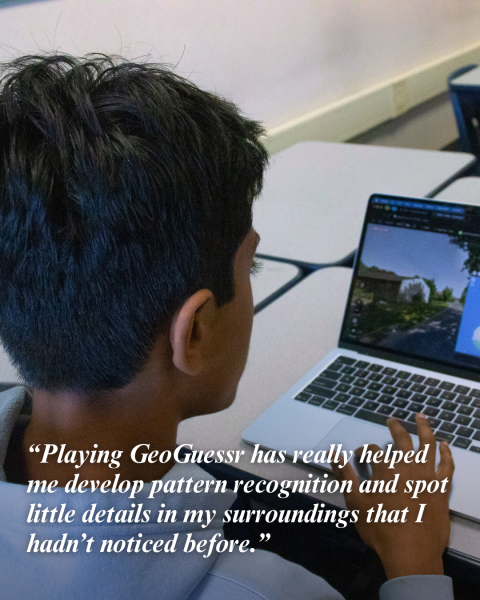
GeoGuessr is dependent on Google Street View. With practice, players can notice real-world details that indicate the country or region. For example, Katyal is familiar with the design of utility poles: some countries like Mexico have octagons, while others, like Israel and the Netherlands, feature black-and-white stripes. Other hints include the colors and shapes of road signs — blue highway signs are common in the majority of European countries — and road markings, such as solid yellow lines in the Americas and diagonal yellow stripes in Japan and South Korea.
Katyal has explored a variety of game modes in GeoGuessr, including playing by himself, with friends and with strangers around the world. The eye for detail and observational skills he’s developed over hours of playing has translated into his daily life, too.
“Playing it has really helped me develop pattern recognition and spot little details in my surroundings that I hadn’t noticed before,” Katyal said. “During car rides, I look out the window and notice things like worldwide differences in road shapes and signs.”
For example, the miles per hour sign and shape is unique to the US, while in Canada, the words “speed limit” are replaced with “maximum.”
In the game, there are five levels a player can be at, depending on their total points accumulated from winning games. Currently, Katyal ranks in the highest tier of gold, or the third level. He aspires to keep elevating his rank and hopes to compete in tournaments for the game. He also plans to continue playing it recreationally as an exercise for his pattern recognition abilities and a way to spend time with friends. In the meantime, he encourages other Vikings to try the game for themselves.
“If you want to learn more about geography and see parts of the world that you would never see otherwise without physically going there, you should play GeoGuessr,” Katyal said.