

















- Modern workout culture has changed drastically in recent years
- Social media has indirectly harmed the youth’s perception of fitness, leading to unhealthy habits
- Students should shift their perspective from focusing on vanity to improving wellbeing
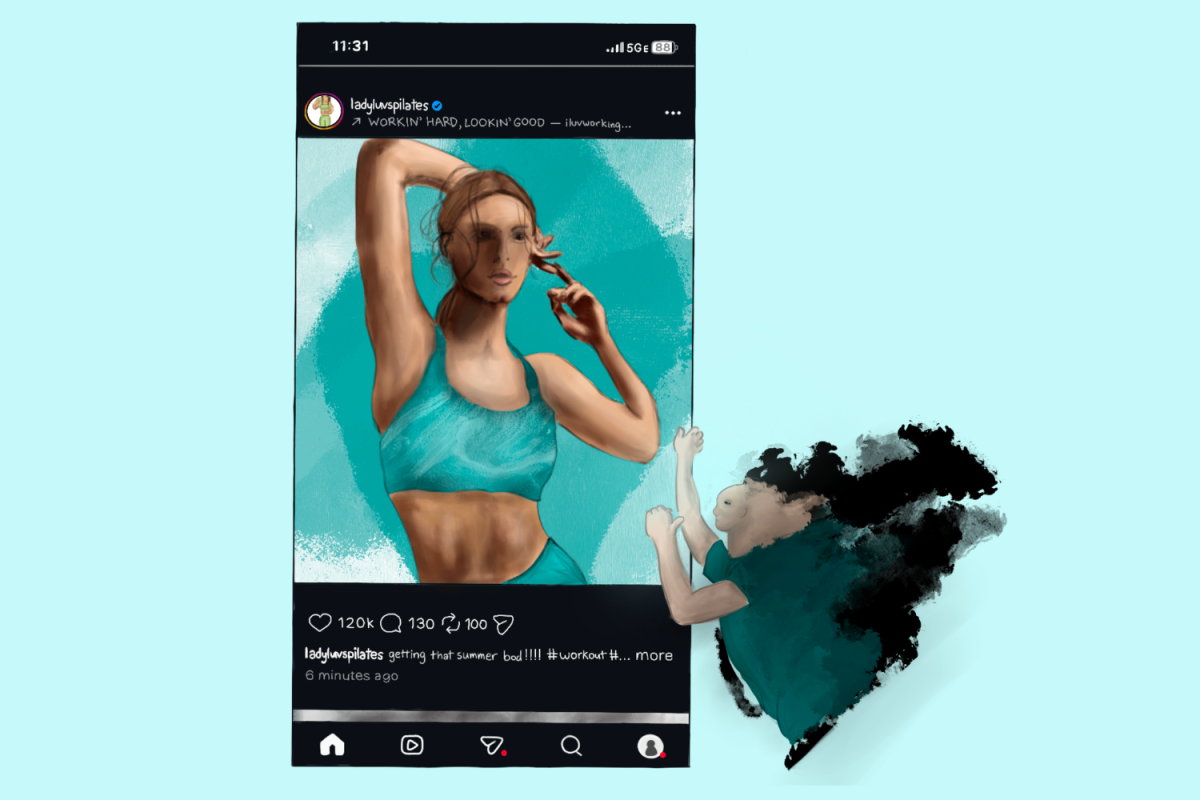
As summertime rapidly approaches, many students see their social media feed filled with content about fitness and achieving the perfect “summer bod.” Immediately, they feel compelled to hit the gym — not for their personal well-being, but to achieve a specific body shape. Modern workout culture has become synonymous with harmful social media trends.
Regular exercise is crucial for physical and mental health. Studies have shown that intense workouts dramatically increase the production of endorphins, a hormone that acts as a natural painkiller and stress reliever. However, social media has tainted how people perceive going to the gym — and how they perceive themselves.
“We have things like Instagram and TikTok pushing unrealistic body standards towards a lot of students,” weight training teacher Joseph Luo said. “However, there’s a lot more information online — if they take the time to understand that, there’s a lot more science-based workouts for them to use.”
Thousands of social media users now follow content purely about attaining certain physiques, such as sculpted abs or larger biceps. Influencers push short-form videos that focus purely on the aesthetics of working out. Although promoting fitness through social media isn’t inherently bad, the way people perceive social media content has revealed the dark side of following fitness influencers.
“I follow some social media fitness influencers and they help motivate me to workout,” junior Owen Huang said. “However, the goals they set may not be realistic because of the external factors that they have, such as genetics and supplements they use, could harm someone else, which is a toxic effect of using social media.”
Some argue that social media provides a positive influence by motivating people to stay active. It is true that most fitness influencers don’t intend to cause harm. However, the culture of constant comparison highlights insecurities and harms mental health. Social media constantly reaffirms the notion of a “correct” body type, which completely misses the point of why one should work out in the first place: for wellness and health. When people’s motivations are misguided, their actions will follow suit.
“I have friends that went through troubles with body dysmorphia,” junior Emma Ha said. “When they started working out, like most, initially it would be for the health, but it would shift over to the aesthetics.”
Social media has created a self-critical workout culture where people exercise for all the wrong reasons. Instead of being influenced by online workout content, people should tailor their workout routines to their own bodies, lifestyles and goals. Being knowledgeable about exercise should be a priority, as it ensures that one can maintain overall health over a trendy body type.
“Everyone’s different, but what I do want students to do is understand how to work out,” Luo said. “I want them to know how to create a workout program, how to create a food plan and track macros; it’s not just about getting stronger. I believe these skills are very important in helping build longevity for your health.”