


















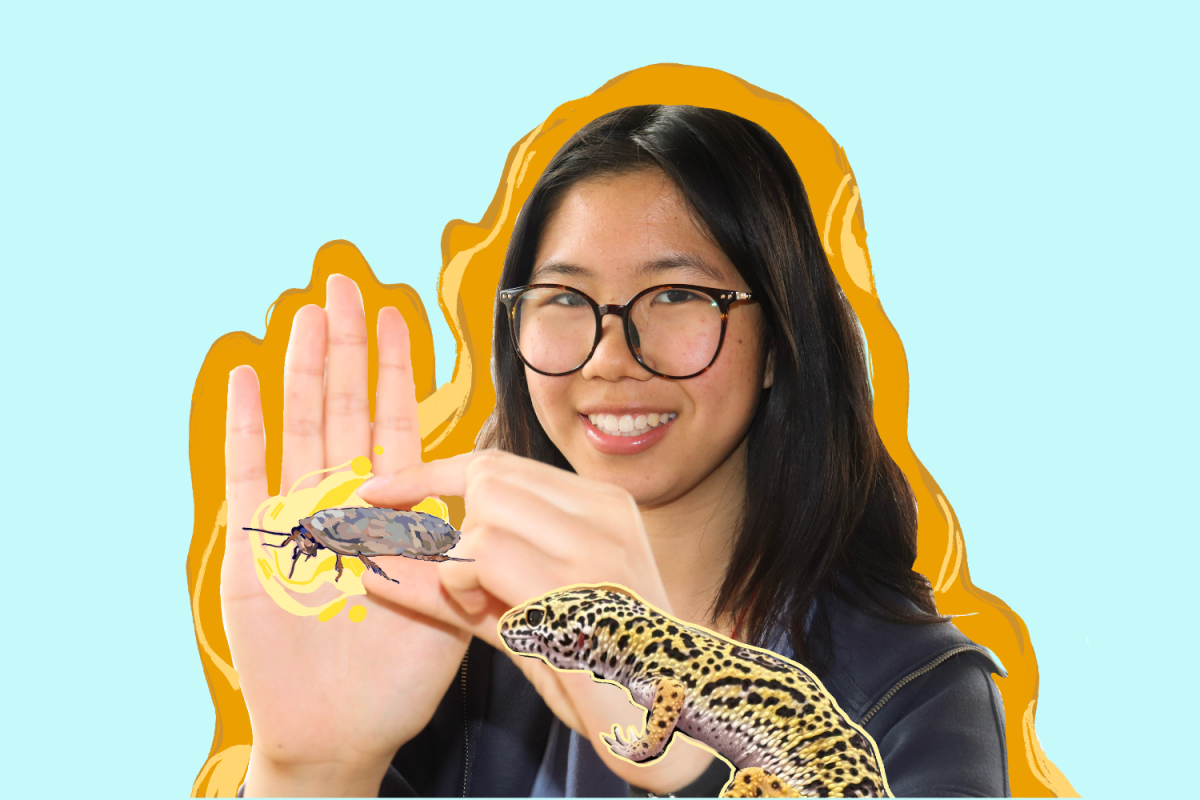
Shock, disgust and fear are common reactions when seeing a nest of roaches, but these creatures are a regular sight for junior Eileen Zhao. Zhao’s pet leopard gecko eats dubia roaches, but instead of simply buying roaches for him, she breeds them herself in her bedroom.
In December 2025, Zhao bought a leopard gecko and named him Oatmeal after the many oat-dwelling insects that geckos eat. She had been interested in owning a reptile ever since she saw them in videos and decided to raise a beginner-friendly leopard gecko.
“I was super excited, because it would be my first time owning a reptile,” said Zhao. “I was super nervous too, because I wanted to make sure that he would live the best life that he could.”
At first, Oatmeal’s diet consisted of wax moth caterpillars. While easily digestible for Oatmeal, Zhao thought that they were too fatty and started researching alternatives, soon stumbling across the dubia roach.
Dubia roaches are known as the best feeder insects for reptiles, with high protein and low fat. However, such nutritious insects come at a hefty price tag for a long-term feeding solution.
“Dubia roaches are really expensive, so breeding them helped minimize the cost a lot,” Zhao said.
Zhao breeds around 200 roaches in a bin filled with egg cartons that the insects can use as hiding spaces. A heating pad below the bin maintains the 90 to 100 degrees Fahrenheit temperature that roaches require. She feeds them fruits and vegetables, including apples and carrots, rotating foods so they maintain a nutritious diet.
Despite her now-productive roach breeding, Zhao bumped into some obstacles getting started. At first, Zhao bought roaches from Petco, but she couldn’t start a breeding colony due to their poor quality. Thus, she bought high-quality roaches online. Yet those roaches’ long two-month maturation period meant that she didn’t have enough baby roaches to feed Oatmeal; she had to buy more.
Along with five dubia roaches, Zhao feeds Oatmeal two mealworms per day, breeding them in a separate container filled with oats. To prevent cannibalization between stages, Zhao also has to separate the various stages of mealworm development.
“I think it’s a really interesting and awesome way to feed pets live food,” senior and friend Aidan Tung said. “The breeding project itself is really interesting because you have to figure out the conditions for them to reproduce, but not escape.”
Despite all the work that Zhao puts into breeding Oatmeal’s food, she finds it worthwhile to enjoy moments with Oatmeal.
“I was super proud of him when I saw him shedding for the first time,” Zhao said. “It was just a really cool process.”
Zhao’s friends and relatives were not so pleased when she started breeding insects. Her family, especially her grandparents, refused to go into her room once the roach setup was in place. Zhao, on the other hand, was always comfortable with insects.
“When I was younger, I’d go home with rolly-pollies,” Zhao said. “I was never shocked about having insects.”
In the future, she plans to study biology and finds her roach breeding to be a valuable experience.
“I think a lot of people think that it’s really disgusting and roaches are just dirty, but I actually find them pretty fascinating, and I think it’s a really cool experience,” Zhao said.