
















The newest season of “Stranger Things” received heavy backlash for its dull script, in which characters constantly over-explain the same conflict that has driven the past four seasons. Rather than trusting the audience to follow the stakes, the show spells them out again and again.
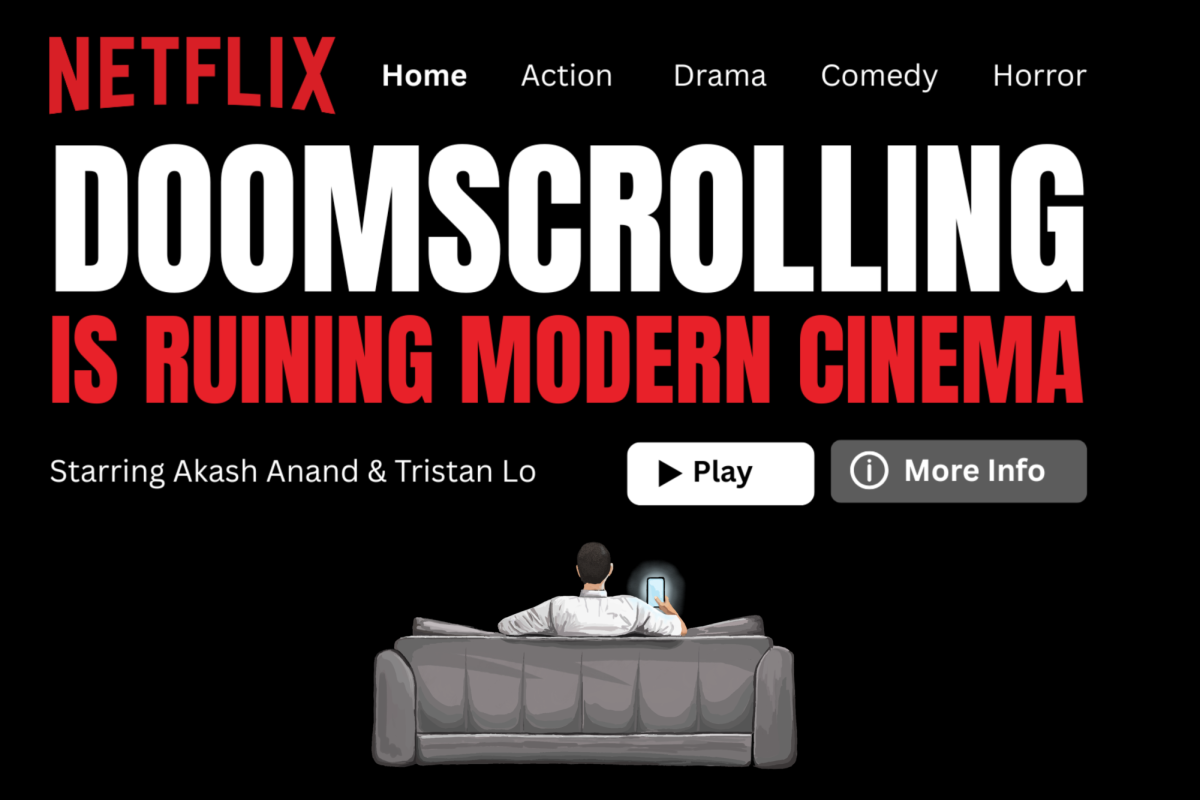
The best movies have always been those with captivating storylines that audiences can personally connect with. However, recent content published by large streaming services, specifically Netflix, has catered more and more to lowering attention spans, rather than aiming for true connection with an engaged audience. Streaming companies need to return to developing more nuanced storytelling — shifting their focus away from doomscrollers and back toward audiences that want to truly sit down and watch.
The lack of depth in many recent Netflix series points to an attempt to please the modern audience. With the exponential rise of doomscrolling and short-form content on social media, viewers often concurrently watch television and scroll on their phone, a habit dubbed “second-screening.” According to the New York Times, human attention spans have dropped from 12 seconds to a measly eight seconds in the last 25 years.
Rather than upholding high cinematic standards, Netflix has allowed writers to dumb down their dialogue and have actors explain exactly what they are doing in a scene, ensuring that viewers who are looking at their phones can still follow along. As this principle has found its way into plenty of mainstream media, it has come at a terrible cost to quality: instead of artfully intertwining key plot points, writers have begun to blatantly spoonfeed audiences, demonstrating how the shift from theater to streaming has impacted how we consume entertainment.
Cinema is most effective as a storytelling medium built on nuance and emotional payoff. Several television shows have followed this blueprint when crafting their plotlines. Consider the contrast between “Stranger Things” and more tightly-constructed projects like the BBC’s “Boiling Point,” which was shot in one continuous take across a little over an hour and a half. The 2021 film effectively establishes its central conflict of a chef in East London attempting to prevent his personal and professional struggles from ruining his career, allowing it to unfold organically without constantly restating its themes of workplace stress and mental health — themes that audiences can grasp early in the film and hold on to throughout the series.
“More passion is driven behind smaller-name productions,” senior Jinhyo Lee said. “I think that’s where the medium of film should be pushed forward the most. It’s got the most passion behind it, and it’s not obfuscated by greed and any other social interests.”
In addition to the declining quality of script writing, Netflix shows have been criticized for a slew of low-effort habits that target profit over quality, such as cancelling low-profit shows early and milking lucrative ones well past their expiration date. Many of its shows have lazy cinematography that seems overly polished and lacks depth. Not only does “Netflix lighting” — dull, overly bright or dark and made specifically for the purpose of streaming — take away from aesthetic enjoyment, it diminishes a scene’s ability to visually and intentionally communicate emotions that relate to the audience. When crafting TV shows and movies, Netflix no longer values the artistic qualities that make them worth watching.
“It’s just all about business now, and about how much money is pouring in,” junior Isaac Herrera said. “Rather than focusing on the actual story itself, they take away from the substance of the shows.”
Netflix’s unimaginative approach to new productions is motivated by profit, an unavoidable aspect of the film industry that essentially fuels all creation. If Netflix does not adapt to the shifts of consumer interests, it risks generating a financial deficit and falling behind in trends, especially on social media. This creates a lose-lose situation, where Netflix is forced to both cater to a growing audience while sacrificing creativity in their work.
Even as Netflix is compelled to choose profit over quality, the company is still willingly sacrificing the art of film to appease a new wave of doomscrollers. Not only does this show that big-name corporations are attempting to please and take advantage of younger audiences, but it also displays how modern individuals are over-consuming social media content. Although Netflix should undoubtedly improve the quality of its products, future generations must also realize the addictive dangers of short-form content in aspects of everyday life. Instead of delving deep into mindless scrolling, future generations should prioritize instilling healthy digital habits while maintaining their mental well-being.