














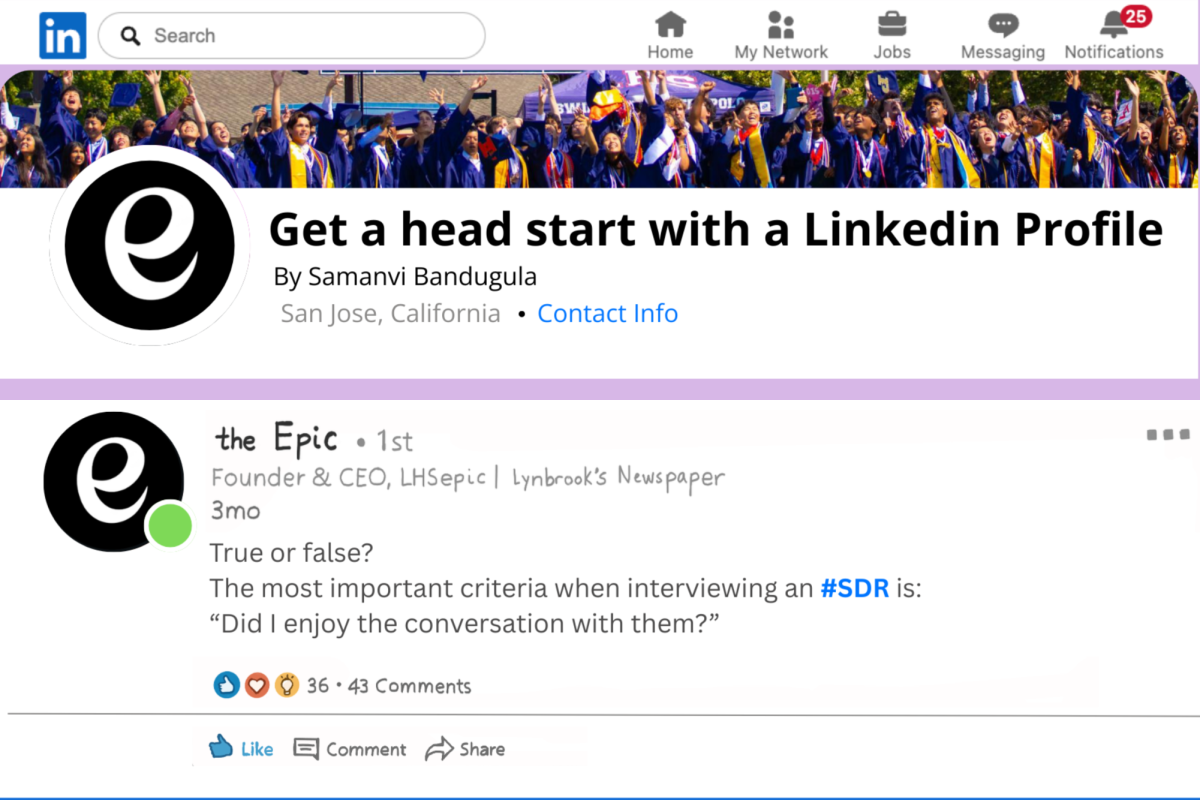
The sounds of the bustling lunch line fade as a student checks their notification. A message replying to their LinkedIn post reads: “Hello! I saw your interest and experience in computer science on your profile. Are you available for a quick coffee chat?”
According to the Pew Research Center, only about 9% of high school students use LinkedIn. This represents a missed opportunity: LinkedIn allows high schoolers to make a solid first step into the professional world to build relationships and uncover opportunities. More students should take advantage of LinkedIn to get a head start in having a successful career.
LinkedIn’s professional atmosphere can feel alienating to high schoolers who are used to casual social media platforms like TikTok and Instagram. However, this professionalism trains students for the job market, where the ability to showcase your skills is needed. It is important to note that the people viewing a student’s profile will know that they are looking to learn. This is not a weakness, but a strength that shows that a young mind is willing to soak up knowledge.
“People can be afraid to go out of their boundaries, but when you push yourself to become uncomfortable, that’s when the most growth happens,” Class of 2025 alumna and LinkedIn user Anusha Shringi said.
During job and internship recruitment, employers often search for a candidate’s LinkedIn to gain a solid understanding of them as people beyond their resumes. Having a detailed profile, no matter a student’s achievements, highlights their initiative and sets them apart from peers who lack a professional presence.
“In sophomore year, I was part of the Business Entrepreneurship Encouragement Program where I had to reach out to a venture capitalist who had over 20,000 connections,” junior Shreshta Ramji said. “I was scared to contact him, but he ended up being very excited to help out. This is what LinkedIn is about: meeting new people and exposing yourself to the industry before you set foot into it.”
Many people underestimate the power of connections. Having a two-way link comes in handy when seeking information about a role or to simply stay in touch.
“Networking is the No. 1 skill you can learn and develop, and you’ll use it no matter where you are in your life, whether professional or personal,” college and career counselor Shveta Bagade said. “LinkedIn is a great way to start creating that network to find opportunities.”
Many students feel overwhelmed when they reach high school because of how much they do not know. Students may wonder, “Should I apply to this summer program? Take this course? Participate in this competition?”
Class of 2025 alumnus Taek Kim also found it difficult to decide where he wanted to dedicate his time in high school. When he made his LinkedIn profile in sophomore year, he knew that he wanted to pursue voter and civic engagement. After research, he discovered a nonprofit called New Voters through its member’s profiles.
“I loved New Voters’ mission of voter expansion,” Kim said. “I immediately applied and was able to secure an internship.”
LinkedIn allows students to see mutual programs, internships and applications, building a culture of transparency, encouragement and even inspiration. For example, if a student is interested in pursuing a specific career, they can connect with alumni in that field for advice.
“When you’re able to talk to people who have experiences in the roles you want to pursue, you’re able to learn so much more about their journey and decide whether it is truly what you want to do,” Shringi said.
As a high schooler, creating a LinkedIn profile, although intimidating, is an important first step into the professional world. However, students must be careful to avoid toxic comparison. LinkedIn will never show the full picture — the hours of trial and countless errors — so students should remember to view each other’s achievements in a positive light and be motivated by their peers’ success.
“It’s really about the perspective you view other people’s profiles with,” junior Arnav Kodavati said. “Are you setting good expectations, or are you putting yourself down?”