











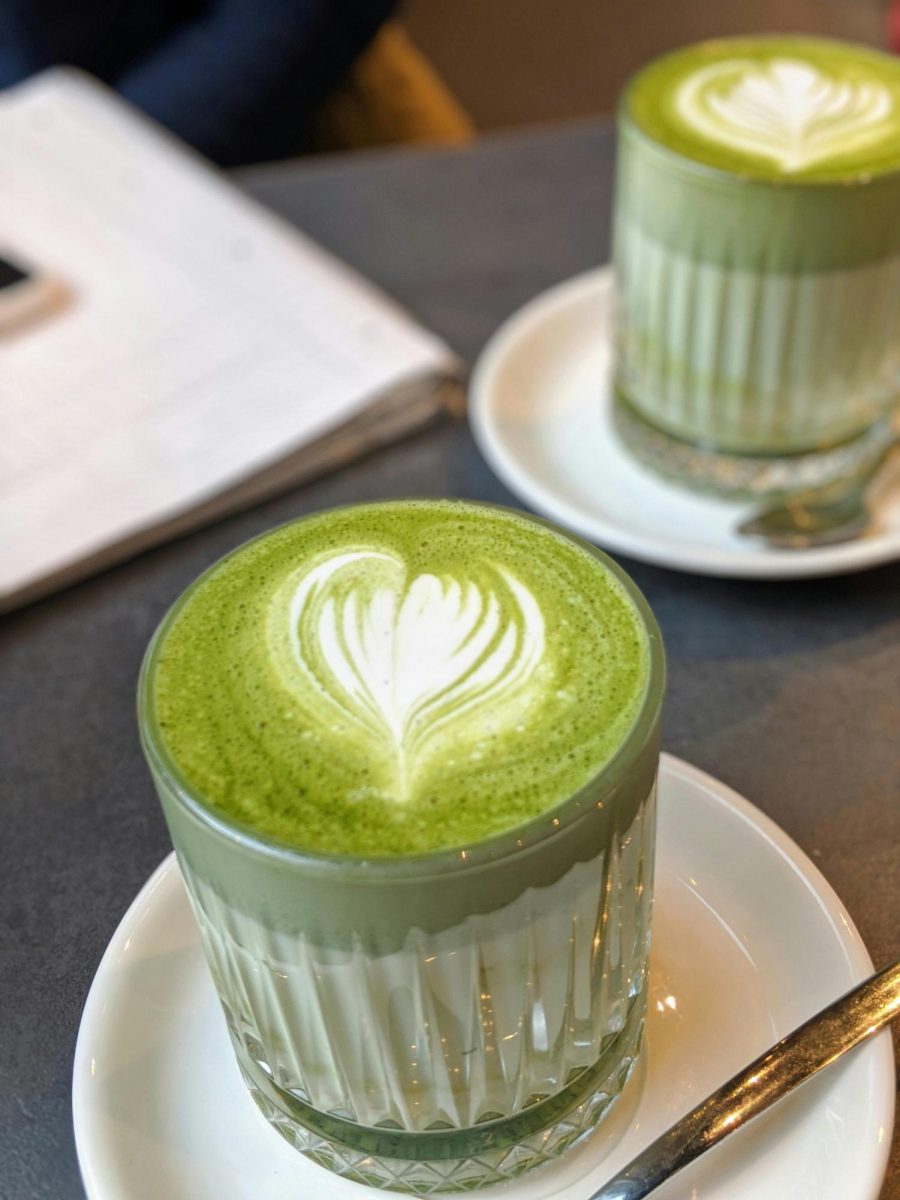
Every time I turn a corner in San José, I see it again. Another sleek storefront, another green sign, another menu promising matcha lattes, fruit teas and signature drinks that look suspiciously familiar. Strawberry matcha here, mango green tea there and herbal blends dressed up with innovative names — but the same flavors. While matcha was once a traditional drink, it has now become a copy-and-paste trend that prioritizes aesthetics and profit over cultural meaning and originality.
Among stores like Heytea, Naisnow and Shuyi, matcha is increasingly presented as a flavor rather than a tradition, with little explanation of its Japanese origins or ceremonial roots. Matcha uses traditional preparation methods, such as hand-whisking with a bamboo whisk and carefully heating water to a precise temperature — all practices rarely acknowledged or used in these stores. Instead of emphasizing this technique to improve its quality, many shops will simplify matcha into a base liquid ingredient meant to be added into drinks, removing the key feature: freshness.
Hand-whisking is often replaced by automated mixers, prioritizing efficiency over texture and richness. Water temperature, critical to preserving flavor, is rarely controlled or monitored, further rendering the process inauthentic. The absence of visible preparation distances customers from understanding how matcha is traditionally made and tastes, making it indistinguishable from other cafe beverages.
In trend-driven drinks, matcha’s natural bitterness and depth are often reduced to a backdrop for fruit purees, syrups or other herbal additions. For example, Naisnow’s matcha coconut drink or Molly Tea’s premium jasmine matcha blur distinctions between teas, fruit drinks and matcha, further diluting its unique, cultural identity. At Ceré Tea, I ordered a banana pudding matcha einspanner — a matcha drink advertised with thick banana cream and cookie crumbs piled on top. The drink was indulgent and carefully styled for social media, but as I tasted it, the matcha felt like an afterthought beneath the heavy layers of sugar and whipped cream. An “einspanner” usually refers to a Viennese espresso drink with a thick cap of whipped cream, yet here the term seemed detached from its origins and used more as decoration. When these trendy terms are plastered on top of one another, matcha is no longer the primary element, but merely a base that is overpowered by various other flavors.
While these drinks may introduce matcha to a broader audience, they often present a version that is heavily altered and unrepresentative of traditional matcha. Rather than familiarizing its traditional taste, it masks its earthy bitterness and umami depth. In doing so, it introduces audiences not to matcha itself, but to a diluted, dessert-like interpretation that bears little resemblance to the ceremonial or standard cafe versions.
The rapid expansion of matcha shops across the Bay Area has created an oversaturated market where individual brands are increasingly difficult to distinguish. As I’ve visited more cafes over the past year, I’ve begun to notice that the menus start to blur together. Nearly every store offers the same core lineup of matcha lattes and fruit teas. Popular items are quickly replicated across shops, turning a unique, brand representing drink into a familiar taste you can find anywhere.
I remember trying a matcha float at Matcha Town, impressed by the option to customize the intensity of the matcha ice cream from level one to five. A few weeks later, I saw almost the exact same drink at Matsu Matcha, with identical intensity levels and the same combination of matcha powder, milk and matcha ice cream. The only noticeable difference was the cup design. This pattern of imitation discourages innovation, as it reduces the incentive for shops to experiment with new flavors or ideas in favor of simply replicating a proven bestseller. Rather than differentiation, shops blend into one homogenous industry shaped by what is already trending rather than something innovative.
The explosion of matcha across the Bay Area is not a sign of cultural appreciation, but of a trend pushed past its limit. With identical menus and questionable quality, the oversaturation of these stores crowds out originality and raises the question of what the Bay Area values more: authenticity or whatever is popular on social media.